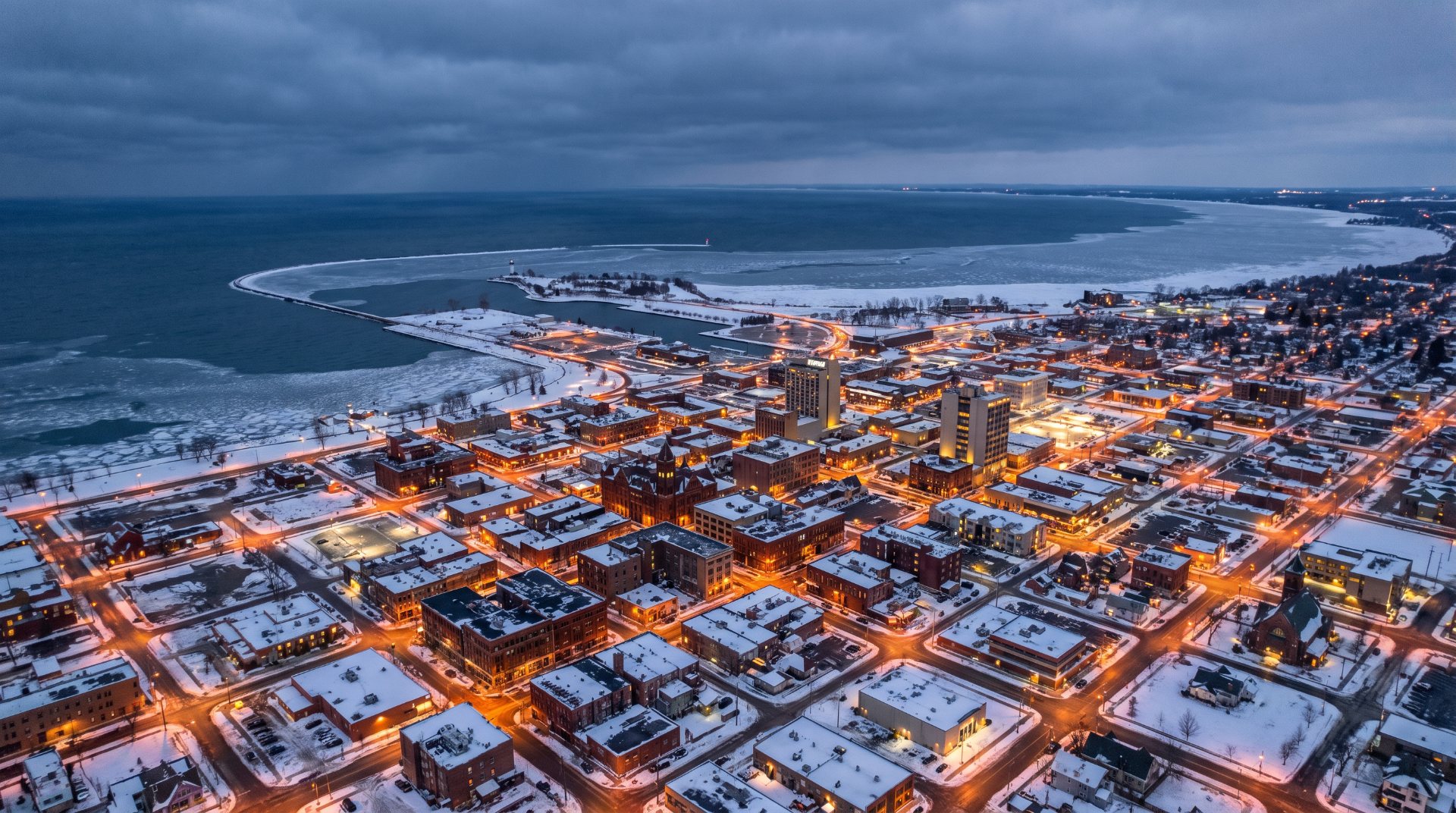
Erie has the oldest housing stock we work in
The City of Erie is where the age of the building matters most. Large parts of the east and west sides went up before 1940 — stone and block foundations, clay sewer laterals, knob-and-tube era wiring that has been worked around rather than replaced, and basements that were built for a coal furnace rather than a family room.
That produces a specific pattern of losses. Clay laterals under the older streets crack and root-intrude, which turns an ordinary heavy rain into a sewage backup rather than a puddle. Foundation walls that were never sealed against the water table seep every spring. Supply lines that run through uninsulated basement joist bays and unheated back porches split in the first hard freeze of the winter.
It also means claim decisions get contested more often here than anywhere else in the county, because the line between a sudden failure and long-term deterioration is genuinely harder to draw in a ninety-year-old house. Documentation is what settles it, which is why we photograph and take readings before anything is moved.
Our equipment stages in Erie, so every address in the city — Bayfront, Little Italy, the East Side, West 8th, Glenwood, Frontier, Wesleyville edge — is inside the 45-minute window, 24 hours a day.
Shut the water main off if it's a supply leak. Kill power at the breaker to the affected area if water is near outlets — never wade into standing water to reach the panel. Lift what you can. Photograph everything before it's touched.
Erie neighborhoods we serve
Bayfront · Little Italy · East Side · West Side · West 8th · West 26th · Glenwood · Frontier · Cascade · Academy · Downtown · East Bayfront · Lake Cliff · Diamond Park
All services in Erie
Neighborhood by neighborhood
The city divides cleanly for our purposes. East of State Street and through the Bayfront district, the housing is oldest — stone and brick foundations, balloon framing, and basements that were dug for coal storage rather than living space. Water there travels inside wall cavities and shows up two rooms from where it started, which is why we meter the whole structure rather than the room with the stain.
West of State and out toward Frontier, the stock shifts to early and mid-century single-family homes on block. The recurring failure is the supply line at the meter and the laundry connection, both of which sit in unheated basement corners.
Downtown and the mixed-use buildings around Perry Square are a different job entirely. A loss on an upper floor becomes a loss for every tenant below it, and the sequencing has to keep the ground-floor businesses trading while drying runs overhead.
The Bayfront and lower East Side sit close enough to the water table that a heavy rain raises groundwater under the slab. That produces the classic Erie call: an inch of water across a finished basement floor with no identifiable leak and no coverage under a standard policy without a water backup endorsement.
Erie averages over 100 inches of snow. The damage is rarely the snow itself — it is the thaw. Meltwater refreezes overnight in gutters and at the eave, backs up under the shingles, and enters the wall assembly. Then it thaws again a week later, and the ceiling stain finally appears in a room nobody was watching.
Four calls we take constantly
Split supply lines
Uninsulated runs in old basement joist bays and unheated back porches. A quarter-inch split can put hundreds of gallons through a floor overnight.
Sewer lateral backups
Aging clay laterals under the older streets. This is Category 3 water and it is handled completely differently to a clean-water loss.
Foundation seepage
Unsealed block and stone walls against a high water table. Usually excluded from coverage, which we will tell you before you file.
Ice dam roof leaks
Show up first as a stained upstairs ceiling, weeks after the snow that caused them.
Erie questions
How fast can you get to my Erie address?
Typically 45 minutes or less anywhere in the city, day or night. Our equipment stages in Erie rather than being dispatched from Pittsburgh or Cleveland, which is the only reason that number is real. The dispatcher gives you a live ETA on the call.
My basement floods every spring. Is that covered?
Groundwater seepage and surface flooding are generally excluded from a standard Pennsylvania homeowners policy. Sewer and drain backup needs a specific endorsement. We will look at your declarations page with you and tell you honestly what we think the claim will support before you call your carrier.
My house is from the 1920s. Does that change the work?
It changes what we look for. Older plaster behaves differently to drywall when it gets wet, stone foundations hold moisture longer, and there is usually more than one previous repair hiding behind a wall. It does not change the standard we dry to.
Do you work with older wiring and plaster?
Yes. We work around knob-and-tube and cloth-insulated wiring carefully and will flag anything unsafe rather than covering it back up. Plaster we dry in place where the readings allow, because replacing it with drywall on a historic interior is rarely what the owner wants.