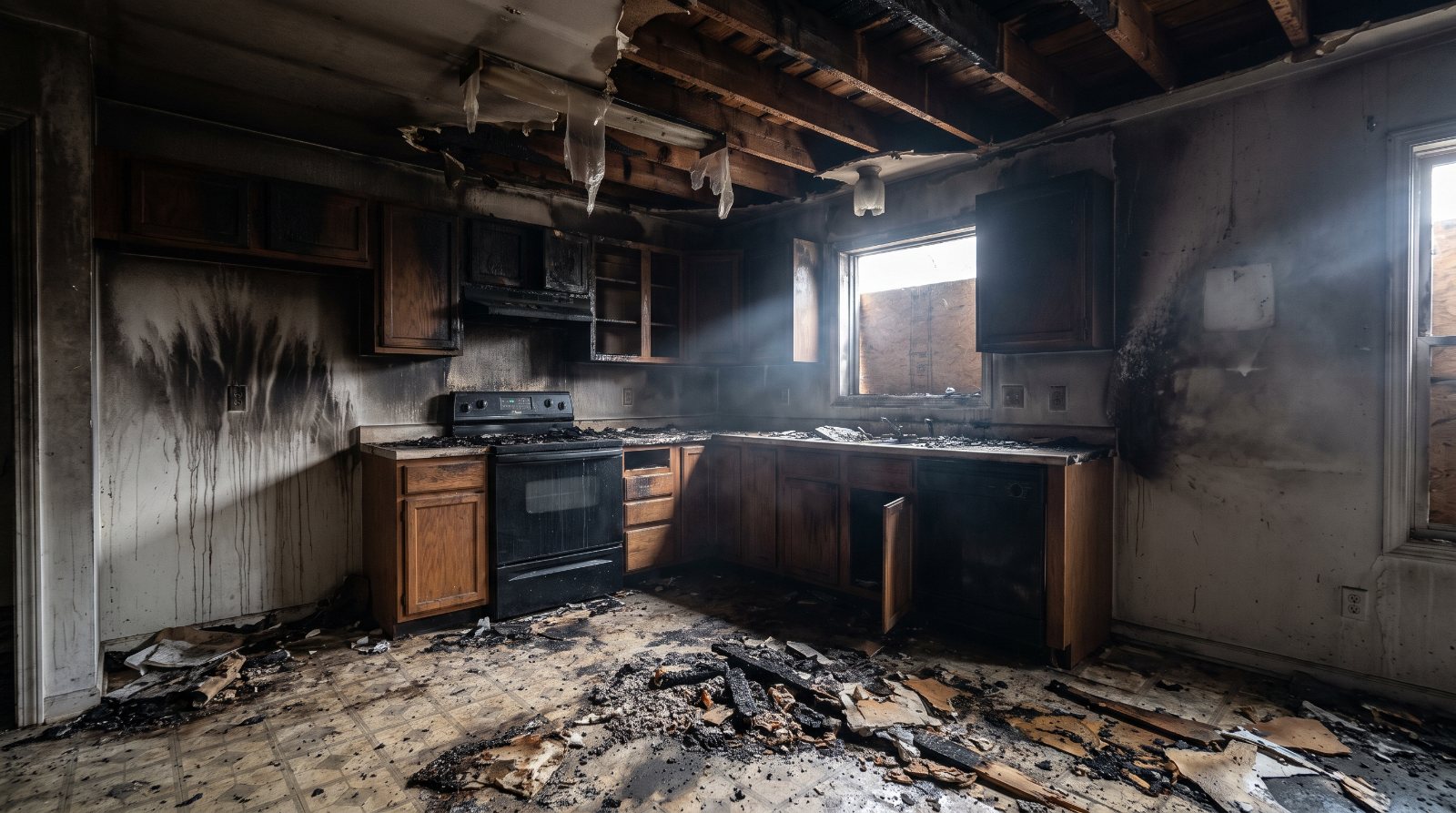
Fire damage is three problems, not one
There's what burned. There's the smoke and soot, which travels through the whole house and keeps doing damage after the fire is out — soot is acidic, and it etches glass, chrome, and appliance finishes within hours. And there's the water the fire department used, which is now a water damage job on top of everything else.
We work all three at once. Structure gets secured and dried while contents are inventoried and cleaned, and deodorization happens after the source of the odor is physically removed — not by fogging over it.
Wiping soot with a household cleaner drives it into the surface and can permanently set the stain. Don't run the HVAC, don't use upholstered furniture, and don't eat food that was exposed. Wait for the assessment.
What's included
What we do, in what order
Secure
Board windows and doors, tarp the roof, fence off hazards. An open structure invites weather, theft, and a claim dispute.
Document
Room-by-room photos and a contents inventory before anything is moved. This is what your claim is built on.
Clean
Dry and wet soot removal matched to each surface, contents packed out to our facility, structure deodorized after removal.
Rebuild
Framing, drywall, cabinets, flooring, trim, paint. Same company, so nothing falls through the gap between two contractors.
Fire & smoke questions
Can the smoke smell really be removed?
Yes, but only by removing what's holding the odor. Smoke particles bond into porous materials — drywall, insulation, carpet pad, upholstery. Anything that can't be cleaned out has to come out. After that, HEPA air scrubbing and hydroxyl treatment handle what's left, and sealing primer locks down framing. Fogging alone just masks it, and the smell comes back on the first humid day.
Even a small fire filled the house with smoke. Why?
Smoke follows air pressure and the HVAC system. A stovetop fire that scorched one wall can deposit residue in every room, inside closets, and on the back of framed pictures. That's why we assess the whole house rather than only the room that burned.
What happens to my belongings?
They're inventoried and photographed, then packed out to our facility for cleaning and storage while the structure is worked. Textiles, electronics, and hard goods each get a different process. Anything not salvageable is documented for your claim rather than quietly thrown away.
Can I go back in to get things?
Only after the fire department releases the structure, and even then be careful — soot is irritating, burned framing can be unstable, and the air may still be bad. Tell us what you need and we'll retrieve documents, medication, and essentials on the first visit.
How long does a fire job take?
A contained single-room fire with smoke through the house is typically two to six weeks including rebuild. A significant structure fire can run several months. You get a schedule with the written scope, and updates as it moves.