Mold is a moisture problem wearing a costume
Erie averages over 100 inches of snow and a long humid summer off the lake, which is a mold climate. In the city the problem is concentrated in stone and block basements that were never designed to be dry, and in additions built over crawlspaces with no vapor barrier.
The most common call is a musty smell with no visible growth. That smell is microbial VOCs, which means growth is active somewhere, usually behind finished basement paneling or under carpet on a below-grade slab.
Rental and multi-unit properties are the other half of our city work. Pennsylvania has no statewide mold statute, so what governs is the lease, the implied warranty of habitability, and documentation. We write reports that hold up in that conversation.
Do not disturb visible growth, and do not run fans on it — that moves spores through the building. Photograph what you can see, note when you first smelled or saw it, and leave it alone until someone meters the space.
All services in Erie
Working with your carrier
We document the loss, provide a written scope, and deal with your adjuster directly. You choose who does the work — that decision is yours, not your insurance company's.
How claims work →The sequence on a mold job
Assessment
On-site inspection, moisture mapping and a written scope. $250, credited back to your invoice if you hire us for the remediation.
Find the water
Mold is a symptom. Until the moisture source is identified, remediation is temporary and everyone knows it.
Containment and removal
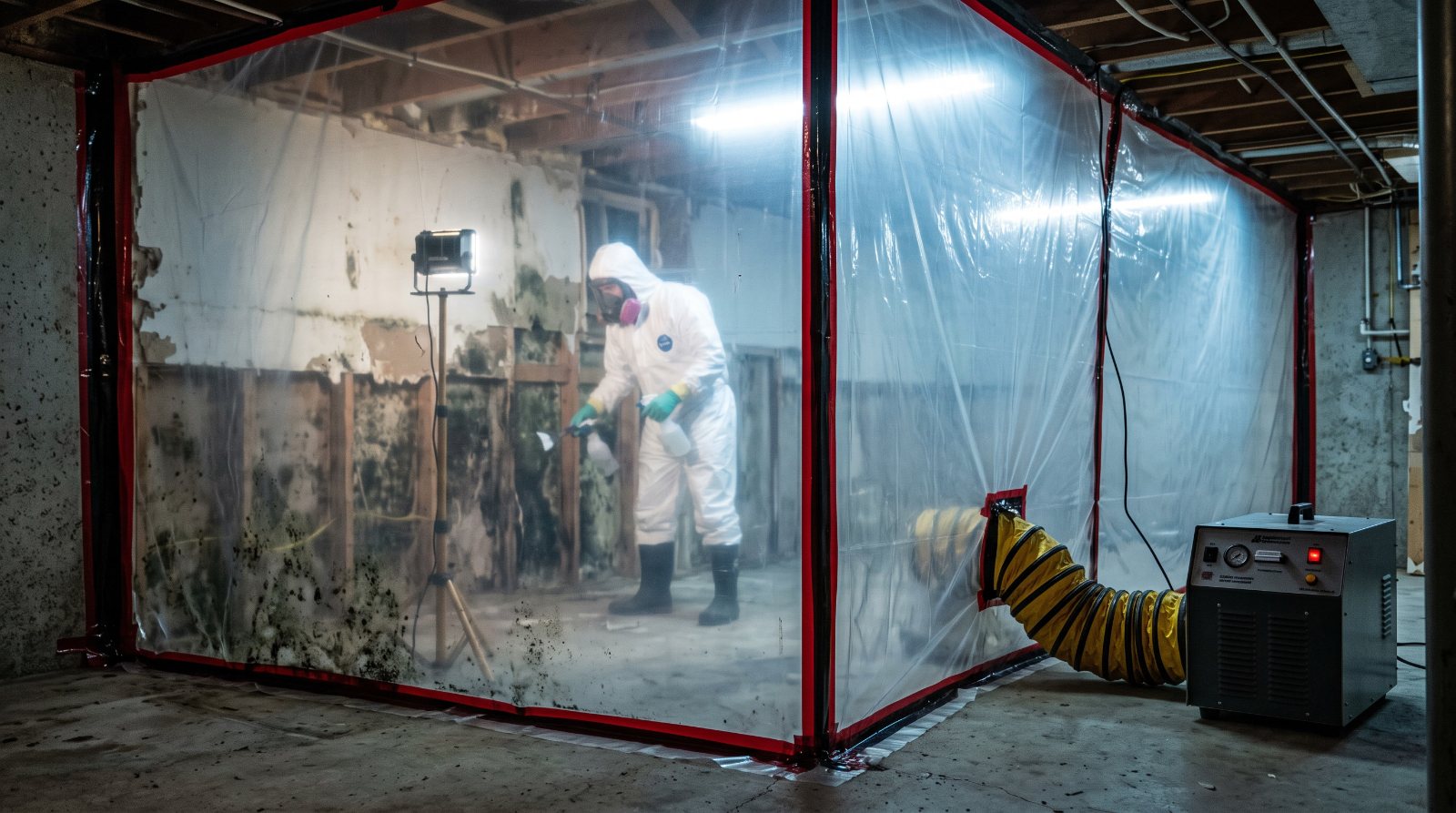
Sealed containment, negative air, HEPA filtration, and removal of affected porous material rather than surface treatment.
Fix the cause
Vapor barrier, drainage, ventilation or dehumidification, so it does not return next season.
Mold questions
Do I need a mold test in Erie?
Often not. If you can see growth and we can trace the moisture, testing tells you what you already know. Testing matters for a dispute, a sale, a health complaint, or clearance after remediation.
What does a mold assessment cost?
$250, covering the on-site inspection, moisture mapping, and a written scope. If you hire us for the remediation, the $250 is credited back to your invoice. Independent lab analysis is quoted separately.
Will insurance cover mold remediation?
Usually only when it results from a covered sudden loss, and many policies cap mold at a few thousand dollars. Long-term humidity or seepage is generally excluded. We tell you what we expect before you file.