Every hour closed is a service you do not get back
Restaurant restoration runs against a clock nothing else does. A dining room closed on a Friday is a Friday gone, and a hotel with a floor out of service in July is turning away bookings it cannot resell. We schedule around service rather than expecting service to schedule around us.
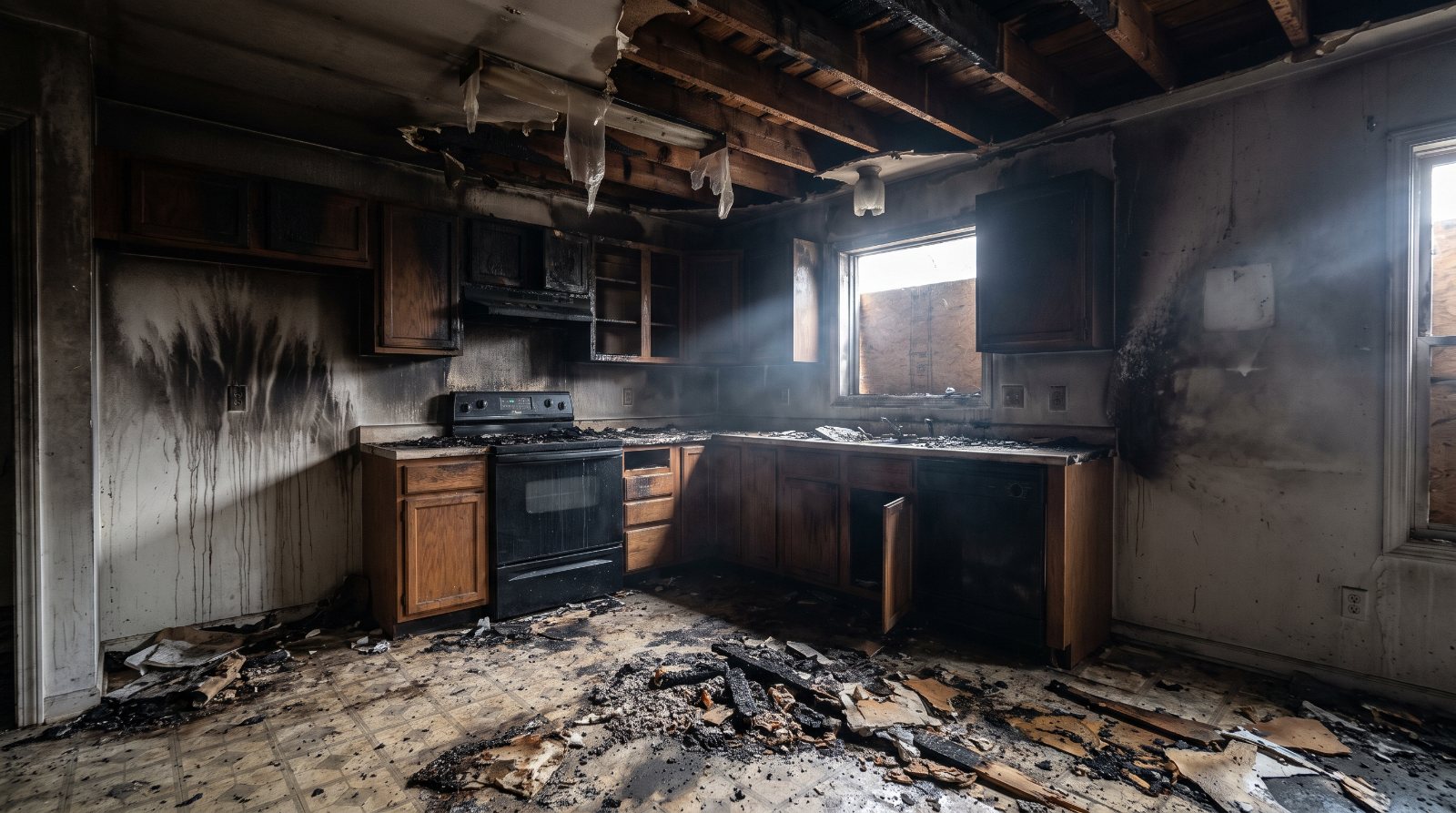
Kitchen fires leave a specific problem: protein and grease residue. It is nearly invisible, it smells worse every day it sits, and it does not respond to ordinary cleaning. It also travels through the hood system and the ductwork into the dining room, which is why a fire that never left the line still closes the front of house.
Health department requirements govern what "clean" means here, and it is a higher bar than a residential kitchen. Food-contact surfaces, prep areas, walk-ins and storage all have to be documented as decontaminated, not just look clean. We work to that standard because a reopening that fails an inspection costs more than the original loss.
Walk-in and cooler failures are the other frequent call. A compressor that fails on a Saturday night means spoiled product, standing water, and a contamination problem across the floor by Monday. Speed on those is about inventory as much as structure.
Most of this work happens between close and open. Overnight crews on a restaurant are standard, and the goal is always that the doors open on the next service.
Services for this property
Before you need us
We walk your building, map the shut-offs, and put after-hours contacts and pre-agreed rates on paper. When something fails at 2am, nobody is looking for a valve.
Commercial overview →What changes on this kind of property
Work between service
Crews scheduled from close to open so the dining room is ready for the next service wherever possible.
Grease and protein residue
Hood systems, ductwork and surfaces cleaned to a standard that removes odour rather than covering it.
Health department standard
Food-contact surfaces, prep areas and storage decontaminated and documented for inspection.
Product and cold storage
Spoiled inventory documented for the claim, walk-ins and coolers decontaminated before restock.
Questions
Can you work overnight so we can open tomorrow?
That is the normal arrangement for restaurants. Whether you actually open depends on the scope, but the schedule is built around service, and we tell you at the walkthrough which services you are realistically losing.
Will the smoke smell come back in the dining room?
Not if the source is removed rather than masked. Grease and protein residue in the hood, ductwork and wall cavities is what causes odour to return weeks later, and reaching it is the difference between a real job and a cosmetic one.
Do you handle the health department side?
We clean and document to health department standards and provide that documentation for your inspection. We are not the inspector, but we make sure you are not walking into that visit without a record.